
Blog
Project update: HOMES project rolls out climate health modifications – Kenya
Read article

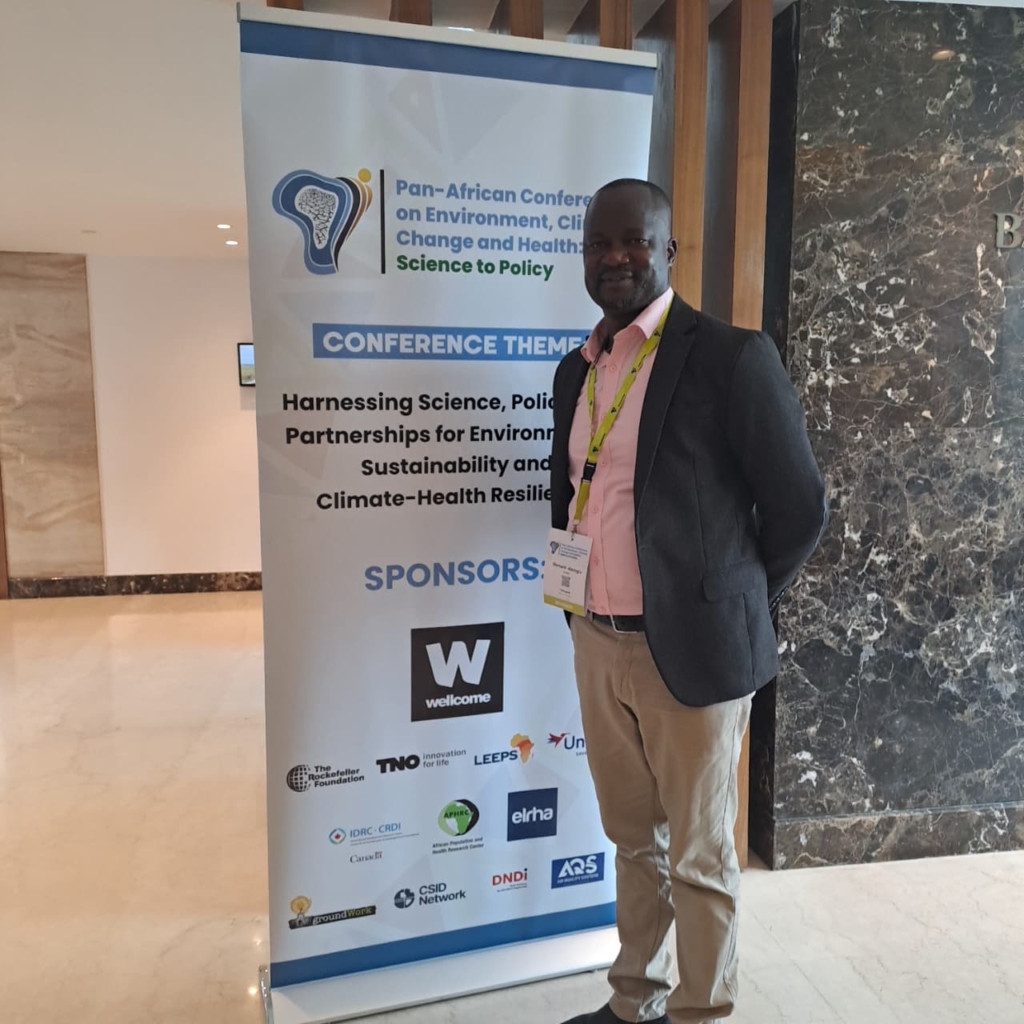
The Pan African Conference on Environment, Climate Change and Health convened a remarkable cross-section of global stakeholders in October including funding institutions, government departments, NGOs, community-based organizations and researchers all united by a single urgent reality: climate change is no longer a future threat but a present crisis demanding immediate action.
Throughout four days of intensive dialogue, two messages emerged with unwavering clarity: Africa bears a disproportionate burden of climate impacts despite contributing less than 5% of global emissions, and climate change impacts not only the environment, but also has significant impacts on peoples’ health. The health impacts are already manifesting through climate-sensitive diseases: vector-borne illnesses like malaria and dengue, waterborne diseases proliferating during floods, heat-related illnesses, and mounting mental health challenges triggered by climate displacement and uncertainty.
Addressing, this inequity demands accelerated, evidence-based action to build climate-resilient health systems across the continent. Collaboration between ministries of environment and health will be critical in tackling climate impacts.
A pivotal moment of the conference came when Wellcome’s Head of Climate Dr Allan, highlighted findings from Berrang-Ford et al.’s systematic mapping of global climate and health research. The study revealed a stark dearth of climate-health evidence from Africa, a gap that undermines our ability to design effective, context-appropriate adaptation strategies. This was a direct call to researchers in the room: Africa needs more homegrown evidence to drive climate action and adaptation.
The HOMES study (Housing Optimizing for Malaria and Environmental Sustainability) represents exactly the kind of integrated, evidence-generating approach the conference called for. As one of nine heat adaptation studies globally funded by Wellcome Trust (explore all projects at heatnexus.org), HOMES directly addresses the intersection of heat stress and vector-borne disease in rural Kenya.
Operating in the hot and humid malaria-endemic areas of Siaya and Kwale Counties, the HOMES study implements co-designed, house modifications targeting critical health threats. These include:
For thermal comfort (heat adaptation):
For malaria prevention:
The HOMES study is now in its evaluation phase, assessing:
In our study, we observed indoor heat index between 27°C to 54°C, exploring the effects of indoor heat on the possibility of causing heat cramps, heat exhaustion and heat stroke on the occupants. We look forward to demonstrating reductions in indoor heat index following housing modifications.
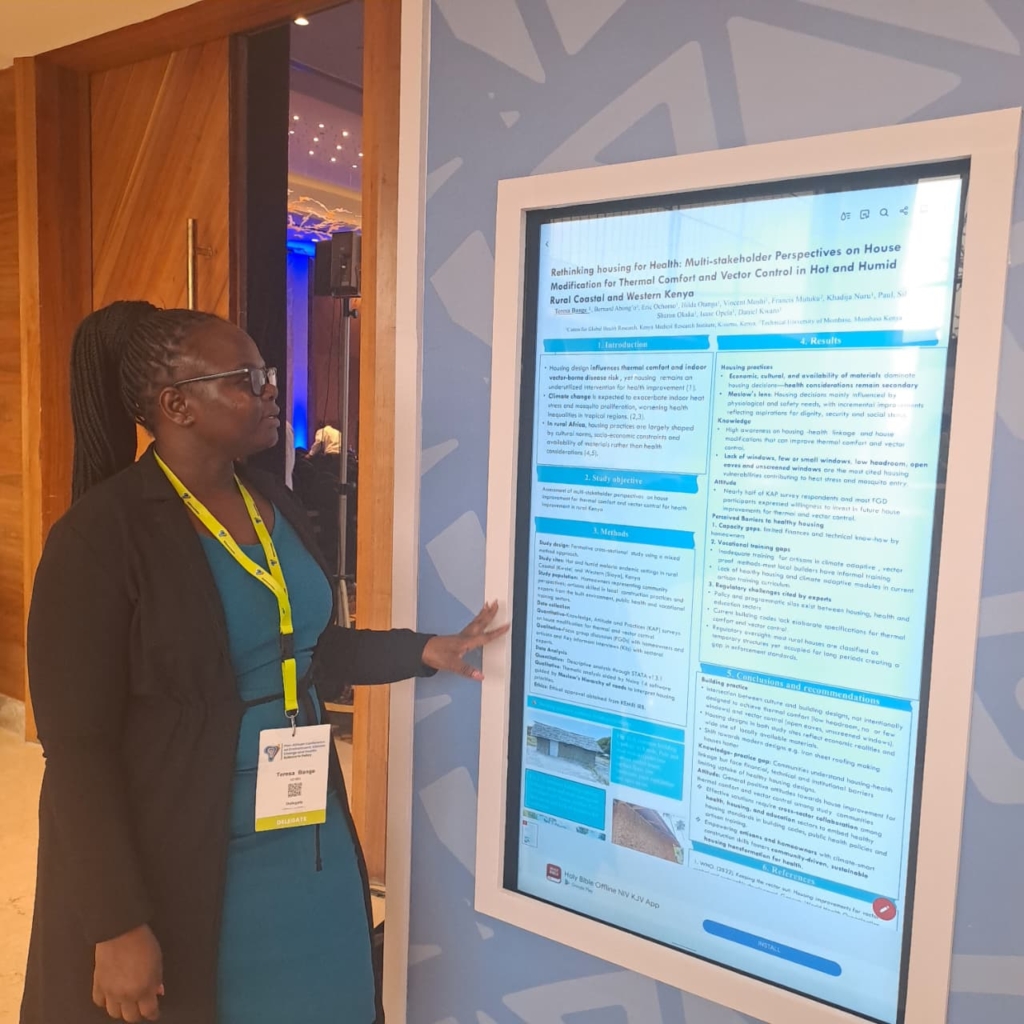
As part of the HOMES study, we have also explored the social science findings showing that rural housing in Siaya and Kwale is not optimized for health, largely because housing design reflects cultural traditions and economic constraints rather than health considerations. low headrooms, few or no windows, open eaves, and unscreened openings that compromise thermal comfort and allow mosquito entry. Further, the shift toward iron sheet roofing, though viewed as a modern modification, significantly increases indoor heat.
The main barriers to healthy housing include limited finances and technical knowledge among homeowners. Additionally, there are major vocational training gaps, with local artisans relying on informal training and lacking exposure to climate-adaptive or vector-proof construction methods .
Regulatory challenges further reinforce these issues as there are policy silos between housing, health, and education sectors. Building codes do not specify the need for thermal comfort or vector control, and most rural houses are classified as “temporary structures,” creating enforcement gaps. These findings revealed critical insights that strongly align with the conference’s call for breaking down silos.
Encouragingly, communities express strong willingness to adopt housing improvements for both cooling and mosquito control; they understand the connection between housing and health but lack the resources and technical support needed to act on this knowledge.
Our baseline findings point to a clear conclusion that echoes the conference’s central themes: effective solutions require cross-sector collaboration. Healthy housing standards must be embedded in building codes and regulatory frameworks, public health policies and artisan vocational training curricula.
Empowering artisans and homeowners with climate-smart construction skills can foster community-driven, sustainable housing transformation. We hope that the robust evidence generated from the HOMES study will lead to policy change that ensures healthy housing becomes standard practice, not an aspirational exception.
The conference emphasized the importance of conducting comprehensive vulnerability assessments to strengthen climate action. The HOMES project contributes directly to this agenda by generating localized evidence on dual health vulnerabilities—heat and malaria—and demonstrating practical, scalable interventions. It also promotes one health and home-grown solutions through a human-centered approach, co-designing housing interventions with community members at the centre of addressing the dual challenges affecting them as well as key stakeholders from the built environment, public health, and vocational training institutions at national, regional, and subnational levels.
The Kenya Medical Research Institute (KEMRI) proudly highlighted HOMES as one of its climate change studies generating evidence to drive climate adaptation for improved health outcomes and sustainability. This recognition reinforces our commitment to ensuring our work doesn’t stop at evidence generation but actively influences policy to improve climate adaptation and health outcomes.
As we continue this work, we carry forward the conference’s core message: climate-health action in Africa cannot wait for perfect conditions or complete evidence. We must generate evidence while we act, collaborate across sectors while we learn, and ensure every research finding moves us closer to not only policies but also actions that protect Africa’s most vulnerable populations from our changing climate.